Here’s an unusual and yet useful word. Usufruct means (according to vocabulary.com ) “using someone else’s property as long as you don’t harm it.” Merriam-Webster adds, “Usufruct has been used as a noun for the legal right to use something since the mid-1600s.” It’s apparently a legal term for sharing–as long as whoever is using what’s being shared in a non-destructive way.
I’ve talked about library socialism. The Library Socialism website says “Usufruct is the key to library socialism – and how it can radically change the nature of a capitalist society into one that works for the people of that society instead of just a few.” They say, “In the simplest terms, the right of usufruct means you can use things, but you cannot deny them to others when you’re not using them, and you do not have the right to destroy them to prevent others from using them.” They go on to compare this to taking out a book from the library. You have a right to borrow it and use it, temporarily, as long as you don’t harm it.
Imagine if we extend this to all manner of things. In fact, many public libraries these days offer a “Library of Things”, offering stuff like tools, toys, seeds, kitchenware, etc. I know of at least one library that offered to loan out e-bikes. This is true resource sharing. How can we extend this?
Twin Oaks (and other of the communes) often practice radical sharing, including clothes and bikes–sometimes using what I call public/private options A group that I’m getting involved with now, the Design Studio for Social Intervention, .created what they called a “Public Kitchen”–a place where people could cook and eat.
Imagine a world full of radical sharing, practicing usufruct, so that everyone had access to what they needed. It would be the opposite of this capitalist society where people hoard what they have, sometimes out of greed and sometimes out of fear that they won’t have what they need if they share what they have. It would be a world of abundance rather than scarcity. I think the communes are pointing the way, but there are dozens and dozens of ways to share.
I talked in my post on Social Change for What? about a future of diversity, a future with many, many possibilities, communes/income-sharing communities among them. I talked about a future where many folks lived in communities but many others didn’t.
I also talked about what communes had to offer folks in other types of communities. In this post I want to talk about things that the communes have to offer folks who might not live in a community and how we can network all these things together to create a different and diverse society.
Income-sharing communities are all about sharing. Not just income, but most things. Twin Oaks, for example, has lots of things members share. Two that I often point out are clothes and bicycles which at Twin Oaks come in what I refer to as Public/Private Options. Taking the sharing out of the communes might involve creating what has been called “libraries”. Not just libraries of books, but libraries of other things. Tools, for example.
I was already thinking about all this when I read someone’s self description and they mentioned being a “library socialist”. Intrigued, I looked up library socialism. While the concept is involved and uses legal terms like “usufruct” and “abusus”, the basic notion is what I wanted to put out about creating libraries for sharing. “Library socialism … offers another means of distributing goods, both capital and consumer. It provides a way to make us all much more affluent on average, distributing goods and services to where they solve the most needs, not just to where they generate the most profits for a few. And by sharing items, it means that fewer items can satisfy the wants of a society completely.” That’s exactly what the communes are all about. The only difference that I can see is that these folks aren’t living together.
Beyond sharing libraries, I see a society that uses a lot of barter and/or the gift economy. I think that things like Freecycle and giveaways and “Really Really Free Markets” are important beginnings for this.
A third way of sharing is sharing time/skills/and other nonmaterial things. There are already things like time banks and various types of skillshares around where people do this.
Finally, there are mutual aid networks. Mutual aid networks have been around for a very long time but when the pandemic hit, they became a lot more active. One definition of mutual aid is “getting people to come together to meet each other’s needs, recognizing that as humans, our survival is dependent on one another.”
My question is, what if we did it all? What if we replaced our current militarist, white supremacist, patriarchal, corporate capitalist society with something that supported and encouraged communal living but had lots of living alternatives and local networks with many forms of libraries, barter and gift economies, really free markets, lots of time and skill sharing and mutual aid networks, plus worker owned cooperative businesses and small business, all in a variety of cultures, and supportive of a great variety of beliefs and lifestyles. Something that benefited everyone rather than a privileged few.
It would be a mess, right? But what a rich, vibrant mess. I see it all as being (to use adrienne maree brown’s phrase) ‘Interdependent and Decentralized’, that is, there is no centralized government or corporation (or community), but this is not a world that is individualized either. Rather, we would depend on each other. To this I would add that it would be cooperative (of course) and networked, but also modular, diverse, and redundant.
I think these last three are important to create a resilient society. Modular means that the pieces can come apart. If something happens to one community, place, or family, they can leave the network without everything else falling apart. Diverse means many things that I talked about in my Social Change for What? post but it also means that everyone doesn’t need to do everything. With a diversity of people and skills and many other things, we are stronger. Finally, redundancy is one of the things that makes us stronger. When there are several different people, groups, businesses, communities all doing the same thing, again, if something happens to one, there are many more doing whatever is needed. The phrase “Two is one and one is none” is used in prepper circles and apparently in the military as well.
A society that is cooperative, diverse, networked, decentralized, interdependent, modular, and redundant would be, I believe, a society built to last. And if you want to see how it could work, check out the communes for a small scale version of this.
These days I am working on writing solarpunk and positive speculative fiction. Solarpunk and speculative fiction point us
toward ways of being and living together that many folks may not have
even thought of. The goal isn’t to depict the “correct” way we could be
living in the future, the goal is to show that there are many possible
ways and there should be many possibilities, that what the future looks
like may vary from place to place.
In her book, Emergent Strategy,
adrienne maree brown talks about “Creating More Possibilities” as an
essential part of her strategy: “… where we shape tomorrow towards
abundance.” She says, “…in order to create a world that works for more
people, for more life, we have to collaborate on the process of dreaming
and visioning and implementing that world. We have to recognize that a
multitude of realities have, do, and will exist. … The more people who
cocreate the future, the more people whose concerns will be addressed
from the foundational level in this world.”
My only problem with “creating more
possibilities” is that there are folks (Trump, Putin, Netanyahu,
Erdoğan, Modi, etc) who are busy trying to create possibilities that I
fear are very hurtful to people. I want to see us “producing more
positive possibilities”–ones that support people and the planet and I
think we need to produce lots and lots of them.
In adrienne maree brown’s book Loving Corrections,
she quotes Ursula Leguin as saying: “I create alternatives. I show that
alternatives exist. Probably the sum total of my messages to the world
is that you do not have to do it one way.”
I also like what Octavia Butler says in A Few Rules for Predicting the Future:
“…there’s no single answer that will solve all our future problems.
There’s no magic bullet. Instead there are thousands of answers–at
least.”
And what Mariame Kaba says in her book, We Do This ‘Til We Free Us:
“I’ve been talking to folks about the importance of us building a
million different little experiments, just building and trying and
taking risks… And the issue is to figure out which alternative works
for what situation.”
So that’s what I hope solarpunk and
utopian works show: that “alternatives exist,” that there are many
positive possibilities, “thousands of answers,” “a million different
little experiments,” “in order to create a world that works for more
people.”
For the last decade, my focus has been on Commune Life, the blog and the Facebook feed and for part of the last year, we've been on Mastodon as well. I ended that a couple of days ago. Fortunately, the Commune Life blog will remain accessible with well over thirteen hundred posts, a huge archive of information on income sharing communities. However that also means that over time it will become increasingly outdated.
With that over, I am hoping that I can return here. I am still (and perhaps more than ever) concerned about social change and I hope to post stuff here, at least occasionally.
My latest interest (besides social change and income sharing communities, both of which I remain interested in) is writing solarpunk. Solarpunk stories are optimistic speculative fiction, looking at futures where we actually survive and prosper. It's solar because it looks at futures with more ecological energy sources and it's punk because these are futures where people take things into their own hands, DIY, or better yet, DIT: Do It Together. And I have a blog for my solarpunk writing and reviews of positive speculative fiction (including utopian fiction). It's called Simple Joyful Futures.
And, just as I have seen communities as laboratories for social change, solarpunk and other forms of positive speculative fiction point to how we could be living better. As I have said many times, it's all connected. And I think my main purpose in the world these days is to point out possibilities. There are many, many alternatives, and I hope people realize that.
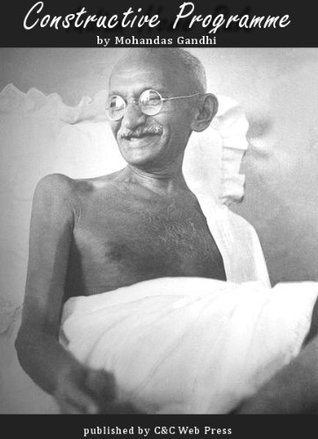
This spring I was in a book group where we were talking about the Gandhian version of social change. This particular session was on his Constructive Program which is the part of his thinking that I was most excited about and we talked about what we could or should be doing now in this country.
One person in the group wanted to see the government give everyone a basic income. Good anarchist that I am, I said I was skeptical of government programs. I, of course, suggested income sharing communities. The woman who suggested the basic income idea had an interesting response to that.
She basically asked what would happen if there were two income sharing communities, where everyone was equal within each of the communities, but one community was a lot wealthier than the other. How should we deal with inequalities between communities? What if one community was located in a more resource rich area than the other? What if one of the communities was mostly white and the other was majority BIPOC? What if one was filled with well-to-do folks and the other was mostly working class?
This is where I think that mutual aid is really important–particularly between communities. I think that, just as the point of egalitarian communes is to reduce inequality within a community, mutual aid can be used to level the economics between communities.
I have said that I see communities as laboratories for social change. I don’t think that it’s really social change if we create a lovely little commune that only benefits whoever lives there. So while I think that building income sharing communities is a great start (unsurprisingly, since that is the point of this blog), I don’t think that it’s enough. Sharing between communities is just as important, as is finding ways of sharing with those not in communities.
Now, there has been some of this happening. The networking of communities is important, from things like the Louisa County cluster to the (hopefully) revitalized Federation of Egalitarian Communities. But this is only the beginning. As we build the communities, one by one, we also have to build the networks and try to figure out ways to include more people in what we do. We need to think about marginalized folks and their needs and how the communes can help them. We need to think about everyone and their needs. The communes can make a difference if they reach out. I think that the communities movement needs to be working on “forming the structure of the new society within the shell of the old,” as the IWW put it.
And so I’m convinced that the communes need to practice mutual aid to extend the work of income sharing.
I've been part of a book discussion group around the book The Gandhian Iceberg by Chris Moore-Backman and we've been talking a lot about how to create social change. My housemate and I (he's also part of the discussion group) have also had several discussions on this.
Part of what I realize is that certain things don't help create social change. Violent acts (and there seem to have been a lot lately) turn off more people than they encourage. And, you can't control people or make them do things (unless you are in power and then they do them under duress and wait for an opportunity to get out from under your control). And finally, pushing people usually doesn't work either. Generally when you push people, they push back
So I have been thinking lately about what I think does work. Here's my most current list:
Listen to everyone
Build relationships
Agitate (use direct action)
Organize (communities, movements, actions)
Educate (get the word out)
Model the change we want to see
Inspire others
Network for mutual aid and support and societal creation
Always be creative
Form the structures of the new society in the shell of the old
Currently, among the many things that I’m doing is that I’m in a book group. We are discussing The Gandhian Iceberg, a book subtitled: “A Nonviolence Manifesto for the Age of the Great Turning.” I’m not going to recommend the book because I wasn’t taken with parts of it, especially the author’s emphasis on Gandhi’s program of “self-purification”. However, I was very interested in what the author had to say about Gandhi’s “constructive program”.
While Gandhi is famous for his teachings and emphasis on nonviolence, especially direct action (which he called ‘satyagraha’), he was even more interested in the total transformation of Indian life. He was particularly concerned about programs he called ‘swadeshi’ (local production) and ‘swaraj’ (self-rule or home-rule). Gandhi is probably best known for his work in helping India achieve independence, however after the British left, Gandhi disagreed with Nehru about where India should go next.
When I started reading The Gandhian Iceberg, I realized that I had a book on Gandhi that I hadn’t read, Postmodern Gandhi and Other Essays. The first essay in the book points out that Gandhi was very critical of Western ‘modernity’. He was very influenced by such western writers as Tolstoy, Ruskin, and Thoreau, who were also critical of modernity. He wanted an India rebuilt from the bottom up, not the top down. He wanted “to convert the Indian National Congress from a political party seeking power to a Lok Sevak Sangh, a People’s Service Association.” The authors point out that “Gandhi started with the village and the villager, with local economy and employment, with work in small-scale industries, crafts, and agriculture. Nehru started with the city and urban life, with centralized state planning, and with production and work in large-scale, impersonal industry and offices.”
Gandhi was far from perfect. (Unfortunately, he did a lot of cringe worthy things.) While he is sometimes revered in the US and other countries for his nonviolent actions, he is less held in esteem in India today. There is a video of Arundhati Roy talking about many of the issues around regarding him as a ‘saint’, when he was anything but. Arundhati Roy mentioned B.R. Ambedkar, which led to me looking him and his issues with Gandhi up on the web. Basically, Ambedkar was a Dalit, the lowest caste in India, which has been called the “untouchables”. While Gandhi was horrified by the treatment of Dalits and wanted to improve their situation, Gandhi was also a devout Hindu and believed the caste system was an important part of his religion. Ambedkar wanted to do away entirely with the caste system. He eventually decided that Hinduism was beyond reform and became a Buddhist. (The authors of Postmodern Gandhi note that Ambedkar also had a problem with Gandhi’s emphasis on villages, seeing them as “a sink of localism, a den of ignorance, narrow-mindedness, and communalism.” They also point out that he wasn’t wrong. But Gandhi was talking about “imagined villages”, villages built around equality as well as self-sufficiency, potential villages of a postmodern future.)
Where did Gandhi’s ideas come from? Gandhi was on an overnight train ride across South Africa, in 1904, when he read John Ruskin’s book, Unto This Last. “...he resolved the next morning ‘to change my life in accordance with the ideals of this book.’” He started an agricultural settlement not far from Durban, in South Africa, which became called the Phoenix Settlement. Then, in 1910, he started Tolstoy Farm, named after Leo Tolstoy, near Johannesburg. These were ashrams, communities devoted to “a life of simple living, service and political activism.” The authors of Postmodern Gandhi (where all this information and the quotes come from) go on to say, “He created seven ashrams in all, two in South Africa, five in India.”
Communitarian? Again from Postmodern Gandhi: “With members drawn from many castes, classes, religions, occupations, regions, and languages… Ashrams prefigured how those from diverse social backgrounds could choose to live a new form of life.” How egalitarian was Gandhi? While he did act as the leader, he also fought for economic equality. From The Gandhian Iceberg comes the following Gandhi quotes: “By the nonviolent method, we seek not to destroy the capitalist, we seek to destroy capitalism…” “Trusteeship provides a means of transforming the present capitalist order of society into an egalitarian one.” And as for sharing, there’s the famous Gandhi quote: “We have Sufficient for Everybody's Needs, Not For Greed.” From The Gandhian Iceberg, “According to the principle of asteya, non-stealing, anything we acquire beyond what we need has been stolen.” He was certainly into simple living and sharing.
So how did it all work out? While Gandhi’s visions of ashrams and imagined villages (his ‘Constructive Program’) were certainly inspiring and he worked hard at creating these alternatives and there were many people who tried to help him, the author of The Gandhian Iceberg notes that Gandhi’s constructive ideas were “met with a great deal of resistance, and the khadi campaign [to get Indians to wear clothes made from home-spun cotton], specifically, often attracted outright ridicule.” He goes on to point out that Judith Brown, in her book Gandhi: Prisoner of Hope, talks about modern India and “describes an India teeming with Gandhi statues, and with roads and institutions named after him, which nevertheless presents barely a whiff of evidence that such a thing as the Constructive Programme ever existed.”
This isn’t to say that the movement died with Gandhi. There were several leaders in India that tried to carry on what he started, in particular Vinoba Bhave and Jayaprakash Narayan, but it seems clear that India today is far from the imagined villages and ashrams of Gandhi.
This work is hard. The egalitarian movements like the Anabaptists were crushed in Europe, the Diggers were crushed in England, and a lot of his constructive program died in India with Gandhi. Yet there are still many people who believe in sharing, equality, and communal living. I recognize that this tour through communal history doesn’t bode well for the egalitarian movements of today, but I also believe that there is a very human impulse toward sharing and community. We can either give up or keep trying. I intend to keep trying.
While egalitarian movements were crushed in continental Europe during the fifteenth and sixteenth centuries (see Part Two of this history), some new variants emerged in England during the middle of the seventeenth century.
The Diggers called themselves the True Levellers to differentiate themselves from the movement that was being referred to as the Levellers, a group of reformers who just wanted things like universal male suffrage and other reforms. The True Levellers, however, wanted to “make the Earth a Common Treasury,” and started April first, 1649, by digging up and cultivating a spot of land in Surrey called St George’s Hill (thus people started calling them “the Diggers”) where they grew food and began a little commune. They were inspired by bible passages such as Acts 4:32 where the apostles and believers “had everything in common.” One of their main spokespersons was Gerrard Winstanley, a tailor from London who wrote the manifesto The True Levellers Standard Advanced, where he declared: “The Work we are going about is this, To dig up Georges-Hill and the waste Ground thereabouts, and to Sow Corn, and to eat our bread together by the sweat of our brows.”
This rebellion didn’t last long. As one writer put it: “Fear of a communist takeover spread among local ministers and small property owners. The Diggers at St. Georges Hill suffered insults and assaults, and several Diggers were arrested for trespassing on St. Georges Hill. In March 1650, the small community of Diggers was dispersed. In April, a small Digger community in Cobham was also dispersed after a local Lord of the Manor, Parson Platt, and others destroyed Digger houses, furniture, and scattered their belongings. The Diggers were threatened with death if they returned, and several guards were posted at the property.”
The Diggers were resurrected in San Francisco in the mid-nineteen sixties as part of the Haight-Ashbury hippie scene. These folks consciously took the name from the original DIggers and inspired by them, distributed free food and opened Free Stores.
The Quakers, unlike the Diggers and some of the other egalitarian movements, are still around. I think of them as one of the few nonhierarchical religions and organized spiritual movements. (Offhand, the only other ones I can think of are the Havurah Movement–or at least some parts of it–and the Reclaiming Witches. There are probably others without clergy–let me know in the comments if you know of any.) A Quaker joke I really appreciate is the argument that the Quakers didn’t get rid of the clergy–they got rid of the laity.
The Quakers are also decentralized–they have no central authority. As the authors of the book The Starfish and the Spider put it: “Here was a robust network of people who lived together, conducted business with one another, and shared a common belief system. Put together a close-knit community with shared values and add a belief that everyone’s equal and what do you get? Decentralization.” They go on to add, “The Quakers weren’t just decentralized themselves; they served as the decentralized platform upon which the antislavery movement was built.”
Given the time and location of the Diggers and the Quakers, I wondered if there was any relationship between them. Apparently there were folks in the seventeenth century who thought so. An article on Quakers and Diggers notes that “the Dean of Durham, Thomas Comber, published a book … claiming that the Quakers ‘derived their ideas from the communist writer Gerrard Winstanley’, which in his view made ‘repression of Quakerism… not only a service to God, but a preservation of every man and his property’.” The author of the article goes on to say that many Quaker writers over the years have claimed that there was no evidence of contact between Winstanley and the Quakers until “the late 1970s when historian Barry Reay unearthed in the Friends House archive a letter sent in August 1654 by Edward Burrough in London to Margaret Fell at Swarthmoor. Burrough and Francis Howgill had been dispatched to the capital by Fox as Quaker missionaries, and Burrough reported that ‘Wilstandley says he believes we are sent to perfect that work which fell in their hands. He hath been with us’.” In spite of the misspelling of his name, it seems clear that this was Winstanley. Unfortunately (but probably the reason that the Society of Friends survived while the True Levellers did not) the article goes on to say that “Quakerism had established its headquarters in a gentry house, under the patronage and matronage of a family which had greatly benefited in wealth and influence from their Cromwellian politics and entrepreneurial adventures. The Fells can hardly have been unaware that ‘the work’ associated with Winstanley was a levelling work, a communist work, dedicated to the overthrow of private property and its replacement by common ownership, under the power of an indwelling God who was more sweet reason than lord of lord protectors. It seems not unlikely to me that Margaret Fell and George Fox discouraged further contacts with so notorious an agitator.”
Finally, the author of the article points out ways in which Digger and Quaker positions were “congruent”. He notes that “Winstanley’s and Fox’s radical religio-political ideologies were formed and framed by the revolutionary convulsions of the 1640s” and goes on to say, “these suggested congruities are not simply between Winstanley’s thought and Fox’s, but between True Levelling and first-generation Quakerism en masse.” He elaborates with ten points, but I will suggest if you’re interested that you read the article.
One of the many points that the Diggers and Quakers have in common is an orientation to nonviolence. In my next piece, I intend to write about one of the greatest advocates of nonviolence, Gandhi, as also an advocate for sharing, simple living, and building things on a local level.