Here’s an unusual and yet useful word. Usufruct means (according to vocabulary.com ) “using someone else’s property as long as you don’t harm it.” Merriam-Webster adds, “Usufruct has been used as a noun for the legal right to use something since the mid-1600s.” It’s apparently a legal term for sharing–as long as whoever is using what’s being shared in a non-destructive way.
I’ve talked about library socialism. The Library Socialism website says “Usufruct is the key to library socialism – and how it can radically change the nature of a capitalist society into one that works for the people of that society instead of just a few.” They say, “In the simplest terms, the right of usufruct means you can use things, but you cannot deny them to others when you’re not using them, and you do not have the right to destroy them to prevent others from using them.” They go on to compare this to taking out a book from the library. You have a right to borrow it and use it, temporarily, as long as you don’t harm it.
Imagine if we extend this to all manner of things. In fact, many public libraries these days offer a “Library of Things”, offering stuff like tools, toys, seeds, kitchenware, etc. I know of at least one library that offered to loan out e-bikes. This is true resource sharing. How can we extend this?
Twin Oaks (and other of the communes) often practice radical sharing, including clothes and bikes–sometimes using what I call public/private options A group that I’m getting involved with now, the Design Studio for Social Intervention, .created what they called a “Public Kitchen”–a place where people could cook and eat.
Imagine a world full of radical sharing, practicing usufruct, so that everyone had access to what they needed. It would be the opposite of this capitalist society where people hoard what they have, sometimes out of greed and sometimes out of fear that they won’t have what they need if they share what they have. It would be a world of abundance rather than scarcity. I think the communes are pointing the way, but there are dozens and dozens of ways to share.
I talked in my post on Social Change for What? about a future of diversity, a future with many, many possibilities, communes/income-sharing communities among them. I talked about a future where many folks lived in communities but many others didn’t.
I also talked about what communes had to offer folks in other types of communities. In this post I want to talk about things that the communes have to offer folks who might not live in a community and how we can network all these things together to create a different and diverse society.
Income-sharing communities are all about sharing. Not just income, but most things. Twin Oaks, for example, has lots of things members share. Two that I often point out are clothes and bicycles which at Twin Oaks come in what I refer to as Public/Private Options. Taking the sharing out of the communes might involve creating what has been called “libraries”. Not just libraries of books, but libraries of other things. Tools, for example.
I was already thinking about all this when I read someone’s self description and they mentioned being a “library socialist”. Intrigued, I looked up library socialism. While the concept is involved and uses legal terms like “usufruct” and “abusus”, the basic notion is what I wanted to put out about creating libraries for sharing. “Library socialism … offers another means of distributing goods, both capital and consumer. It provides a way to make us all much more affluent on average, distributing goods and services to where they solve the most needs, not just to where they generate the most profits for a few. And by sharing items, it means that fewer items can satisfy the wants of a society completely.” That’s exactly what the communes are all about. The only difference that I can see is that these folks aren’t living together.
Beyond sharing libraries, I see a society that uses a lot of barter and/or the gift economy. I think that things like Freecycle and giveaways and “Really Really Free Markets” are important beginnings for this.
A third way of sharing is sharing time/skills/and other nonmaterial things. There are already things like time banks and various types of skillshares around where people do this.
Finally, there are mutual aid networks. Mutual aid networks have been around for a very long time but when the pandemic hit, they became a lot more active. One definition of mutual aid is “getting people to come together to meet each other’s needs, recognizing that as humans, our survival is dependent on one another.”
My question is, what if we did it all? What if we replaced our current militarist, white supremacist, patriarchal, corporate capitalist society with something that supported and encouraged communal living but had lots of living alternatives and local networks with many forms of libraries, barter and gift economies, really free markets, lots of time and skill sharing and mutual aid networks, plus worker owned cooperative businesses and small business, all in a variety of cultures, and supportive of a great variety of beliefs and lifestyles. Something that benefited everyone rather than a privileged few.
It would be a mess, right? But what a rich, vibrant mess. I see it all as being (to use adrienne maree brown’s phrase) ‘Interdependent and Decentralized’, that is, there is no centralized government or corporation (or community), but this is not a world that is individualized either. Rather, we would depend on each other. To this I would add that it would be cooperative (of course) and networked, but also modular, diverse, and redundant.
I think these last three are important to create a resilient society. Modular means that the pieces can come apart. If something happens to one community, place, or family, they can leave the network without everything else falling apart. Diverse means many things that I talked about in my Social Change for What? post but it also means that everyone doesn’t need to do everything. With a diversity of people and skills and many other things, we are stronger. Finally, redundancy is one of the things that makes us stronger. When there are several different people, groups, businesses, communities all doing the same thing, again, if something happens to one, there are many more doing whatever is needed. The phrase “Two is one and one is none” is used in prepper circles and apparently in the military as well.
A society that is cooperative, diverse, networked, decentralized, interdependent, modular, and redundant would be, I believe, a society built to last. And if you want to see how it could work, check out the communes for a small scale version of this.
These days I am working on writing solarpunk and positive speculative fiction. Solarpunk and speculative fiction point us
toward ways of being and living together that many folks may not have
even thought of. The goal isn’t to depict the “correct” way we could be
living in the future, the goal is to show that there are many possible
ways and there should be many possibilities, that what the future looks
like may vary from place to place.
In her book, Emergent Strategy,
adrienne maree brown talks about “Creating More Possibilities” as an
essential part of her strategy: “… where we shape tomorrow towards
abundance.” She says, “…in order to create a world that works for more
people, for more life, we have to collaborate on the process of dreaming
and visioning and implementing that world. We have to recognize that a
multitude of realities have, do, and will exist. … The more people who
cocreate the future, the more people whose concerns will be addressed
from the foundational level in this world.”
My only problem with “creating more
possibilities” is that there are folks (Trump, Putin, Netanyahu,
Erdoğan, Modi, etc) who are busy trying to create possibilities that I
fear are very hurtful to people. I want to see us “producing more
positive possibilities”–ones that support people and the planet and I
think we need to produce lots and lots of them.
In adrienne maree brown’s book Loving Corrections,
she quotes Ursula Leguin as saying: “I create alternatives. I show that
alternatives exist. Probably the sum total of my messages to the world
is that you do not have to do it one way.”
I also like what Octavia Butler says in A Few Rules for Predicting the Future:
“…there’s no single answer that will solve all our future problems.
There’s no magic bullet. Instead there are thousands of answers–at
least.”
And what Mariame Kaba says in her book, We Do This ‘Til We Free Us:
“I’ve been talking to folks about the importance of us building a
million different little experiments, just building and trying and
taking risks… And the issue is to figure out which alternative works
for what situation.”
So that’s what I hope solarpunk and
utopian works show: that “alternatives exist,” that there are many
positive possibilities, “thousands of answers,” “a million different
little experiments,” “in order to create a world that works for more
people.”
For the last decade, my focus has been on Commune Life, the blog and the Facebook feed and for part of the last year, we've been on Mastodon as well. I ended that a couple of days ago. Fortunately, the Commune Life blog will remain accessible with well over thirteen hundred posts, a huge archive of information on income sharing communities. However that also means that over time it will become increasingly outdated.
With that over, I am hoping that I can return here. I am still (and perhaps more than ever) concerned about social change and I hope to post stuff here, at least occasionally.
My latest interest (besides social change and income sharing communities, both of which I remain interested in) is writing solarpunk. Solarpunk stories are optimistic speculative fiction, looking at futures where we actually survive and prosper. It's solar because it looks at futures with more ecological energy sources and it's punk because these are futures where people take things into their own hands, DIY, or better yet, DIT: Do It Together. And I have a blog for my solarpunk writing and reviews of positive speculative fiction (including utopian fiction). It's called Simple Joyful Futures.
And, just as I have seen communities as laboratories for social change, solarpunk and other forms of positive speculative fiction point to how we could be living better. As I have said many times, it's all connected. And I think my main purpose in the world these days is to point out possibilities. There are many, many alternatives, and I hope people realize that.
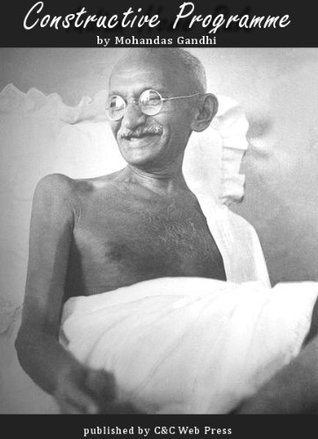
This spring I was in a book group where we were talking about the Gandhian version of social change. This particular session was on his Constructive Program which is the part of his thinking that I was most excited about and we talked about what we could or should be doing now in this country.
One person in the group wanted to see the government give everyone a basic income. Good anarchist that I am, I said I was skeptical of government programs. I, of course, suggested income sharing communities. The woman who suggested the basic income idea had an interesting response to that.
She basically asked what would happen if there were two income sharing communities, where everyone was equal within each of the communities, but one community was a lot wealthier than the other. How should we deal with inequalities between communities? What if one community was located in a more resource rich area than the other? What if one of the communities was mostly white and the other was majority BIPOC? What if one was filled with well-to-do folks and the other was mostly working class?
This is where I think that mutual aid is really important–particularly between communities. I think that, just as the point of egalitarian communes is to reduce inequality within a community, mutual aid can be used to level the economics between communities.
I have said that I see communities as laboratories for social change. I don’t think that it’s really social change if we create a lovely little commune that only benefits whoever lives there. So while I think that building income sharing communities is a great start (unsurprisingly, since that is the point of this blog), I don’t think that it’s enough. Sharing between communities is just as important, as is finding ways of sharing with those not in communities.
Now, there has been some of this happening. The networking of communities is important, from things like the Louisa County cluster to the (hopefully) revitalized Federation of Egalitarian Communities. But this is only the beginning. As we build the communities, one by one, we also have to build the networks and try to figure out ways to include more people in what we do. We need to think about marginalized folks and their needs and how the communes can help them. We need to think about everyone and their needs. The communes can make a difference if they reach out. I think that the communities movement needs to be working on “forming the structure of the new society within the shell of the old,” as the IWW put it.
And so I’m convinced that the communes need to practice mutual aid to extend the work of income sharing.
I've been part of a book discussion group around the book The Gandhian Iceberg by Chris Moore-Backman and we've been talking a lot about how to create social change. My housemate and I (he's also part of the discussion group) have also had several discussions on this.
Part of what I realize is that certain things don't help create social change. Violent acts (and there seem to have been a lot lately) turn off more people than they encourage. And, you can't control people or make them do things (unless you are in power and then they do them under duress and wait for an opportunity to get out from under your control). And finally, pushing people usually doesn't work either. Generally when you push people, they push back
So I have been thinking lately about what I think does work. Here's my most current list:
Listen to everyone
Build relationships
Agitate (use direct action)
Organize (communities, movements, actions)
Educate (get the word out)
Model the change we want to see
Inspire others
Network for mutual aid and support and societal creation
Always be creative
Form the structures of the new society in the shell of the old